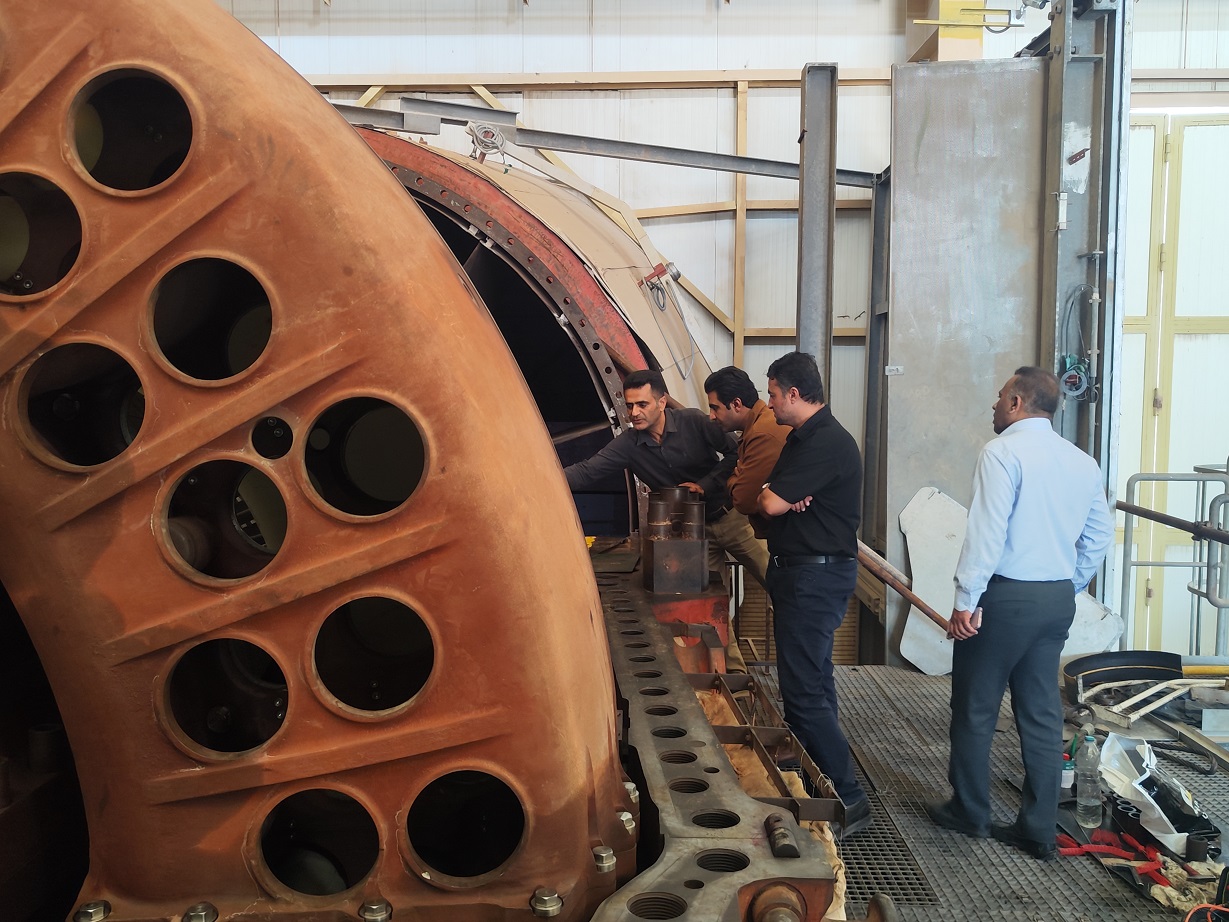
According to the Public Relations Office of Persian Gulf Power Generation Company, the mid‑term overhaul of Unit 3 at the Persian Gulf Gas Power Plant has been successfully completed for the first time entirely through domestic technical capabilities.
This achievement represents another milestone in the plant’s record of operational success. The overhaul was carried out by the plant’s own specialists using up‑to‑date technical knowledge and local expertise, reflecting the strong determination and commitment of the workforce.
As one of the key pillars of energy supply in southeastern Iran, the Persian Gulf Gas Power Plant has consistently pursued self‑sufficiency, stable power generation, and improved operational efficiency. The round‑the‑clock efforts of the plant’s experts—particularly in the mechanical, instrumentation, electrical, and facilities departments—have played a vital role in maintaining reliable energy production at this major facility.
Precise Planning and Coordinated Execution
Engineer Mohammad Moheni‑Nejad, CEO of the Persian Gulf Power Plant, told Darya newspaper that the unit was taken offline to undergo its 18,000‑hour inspection as part of the scheduled maintenance program.
During the inspection, several technical issues were identified, including:
- A rupture in the weld line of the second combustion chamber zone
- Burning and deformation of 47 burners
- Failure of 50 fuel lances
- Breakage of the first‑stage stationary vane
- Multiple cracks in the fifth‑stage stationary vanes
He explained that, for the first time, the complete process of dismantling, fault correction, and mid‑term overhaul of the unit was carried out entirely by the plant’s dedicated specialists under the supervision of the technical and engineering office and the operations team. After completing the necessary technical tests, the unit was successfully synchronized with the national power grid.
Moheni‑Nejad noted that the project not only prevented significant foreign currency expenditures but also contributed to improving efficiency, reliability, and the stability of power generation at the plant.
A Strategic Role in National Electricity Supply
Highlighting the strategic importance of the Persian Gulf Power Plant in the country’s electricity system, Moheni‑Nejad stated that the facility supplies around 2 percent of Iran’s electricity demand. Given that a large portion of the province’s electricity depends on the plant, ensuring full operational readiness of its units is critically important.
He added that after 24 years of operation, maximizing the capabilities of domestic specialists and knowledge‑based companies remains a top priority. The successful overhaul of Unit 3 stands as a clear example of this approach, having been completed entirely through indigenous knowledge and technical capability.
A Milestone in Self‑Reliance and Localization of Technical Expertise
Moheni‑Nejad emphasized that this achievement marks a turning point in the localization of technical expertise within the country’s power generation sector.
“This operation, carried out entirely by domestic specialists for the first time in the operational history of the Persian Gulf Gas Power Plant, represents a significant milestone in strengthening self‑reliance and localizing technical knowledge in the power industry,” he said.
He added that the project not only resulted in considerable foreign currency savings but also demonstrated the practical capability of domestic engineering expertise.
According to Moheni‑Nejad, the experience gained from this project can serve as a practical model for other power plants across the country by helping reduce external dependency, enhance technical resilience, shorten outage durations, and improve overall operational readiness.
Looking Ahead
Outlining the plant’s future outlook, Moheni‑Nejad stated that the Persian Gulf Gas Power Plant will continue pursuing self‑sufficiency, technological advancement, and sustainable energy production by relying on its skilled human resources, development‑oriented strategies, and collaboration with domestic knowledge‑based companies.
He concluded by noting the strategic importance of the facility in maintaining the stability of the national power grid.